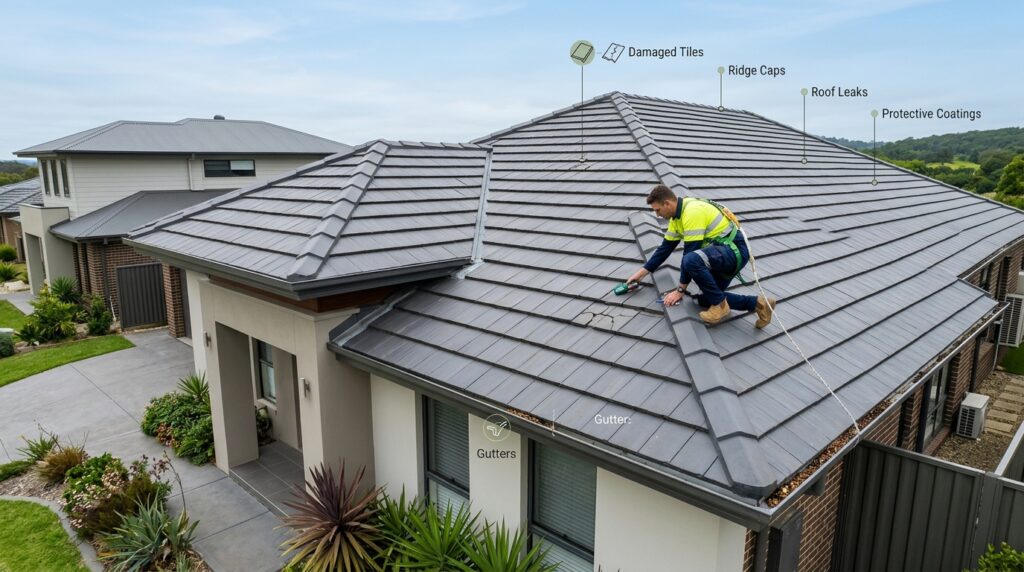
Your roof protects your home from rain, strong winds, harsh sunlight and changing weather conditions. However, small roofing problems can develop over time without being noticed. A cracked tile, loose ridge cap or damaged flashing may not seem serious at first, but it can eventually lead to leaks, damp ceilings and expensive repairs.
The good news is that regular roof checks can help homeowners identify problems early. You do not need to climb onto your roof to notice many warning signs. A simple visual inspection from the ground, along with checks inside your home, can help you understand when your roof needs attention.
This roof repair checklist for homeowners explains what to inspect, which warning signs to look for, when to call a professional and how to keep your roof in good condition throughout the year.
If you discover damage that needs professional attention, Aussie Roof Revival provides roofing services to help homeowners maintain and protect their properties.
Why Every Homeowner Needs a Roof Repair Checklist
Roof damage does not always become obvious straight away. Some problems develop slowly, while others appear after heavy rain, strong winds or storms.
A regular inspection helps you notice changes before they become more serious. It can also help you explain the problem clearly when speaking with a roofing contractor.
A roof repair checklist can help you identify the following issues.
- Cracked or missing roof tiles
- Loose or damaged ridge caps
- Water stains on ceilings and walls
- Rust on metal roofing
- Blocked gutters and downpipes
- Damaged flashing around roof openings
- Moss and algae growth
- Loose roofing materials after strong winds
- Sagging sections or visible roof movement
- Damaged roof coatings and worn surfaces
Not every issue requires a major repair. Some problems can be addressed with targeted maintenance, while others may need a more detailed assessment.
The important thing is to avoid ignoring visible signs of damage.
Roof Repair Checklist for Homeowners
Use the following checklist to assess the visible condition of your roof. Always inspect from a safe position on the ground or from inside your home. Do not walk on roof tiles or climb onto a roof to check for damage.
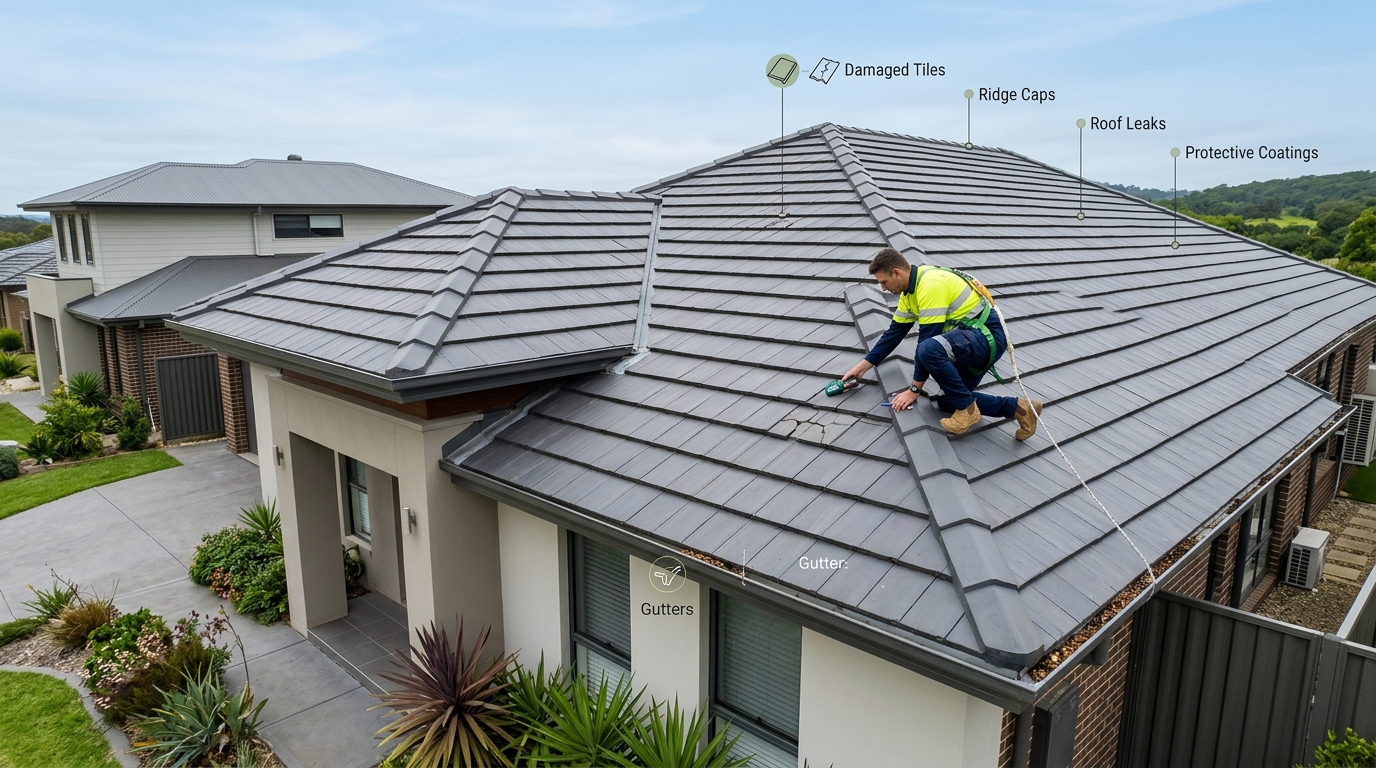
1. Check for Broken or Missing Roof Tiles
Broken and missing tiles are among the most common problems found on tiled roofs. Tiles can crack because of age, impact, movement or exposure to changing weather conditions.
A missing tile can leave the area underneath exposed to rain. A cracked tile may also allow water to enter the roof space, depending on its location and the condition of the roofing system.
From the ground, look for tiles that appear out of place, have visible cracks or leave gaps in the roof surface.
Pay particular attention after strong winds or storms, when tiles may have moved or fallen.
Your checklist should include the following points.
- Look for visible gaps in the tiled roof.
- Check for tiles that appear cracked or uneven.
- Look for pieces of broken tiles around the property.
- Inspect the roof visually after severe weather.
- Arrange a professional inspection if you suspect damage.
If you find damaged tiles, avoid trying to replace them yourself. Roof surfaces can be slippery and unstable, particularly after rain.
Professional roof repair services can help identify damaged areas and determine whether individual tiles need replacing or additional repairs are required.
2. Inspect Ridge Caps and Pointing
Ridge caps cover the highest sections of many tiled roofs. They help protect the roof joints and keep the roofing system secure.
Over time, the bedding and pointing around ridge caps can crack, loosen or deteriorate. This can happen because of ageing materials, weather exposure and normal movement within the roof.
From the ground, look for ridge caps that appear uneven, loose or visibly damaged. You may also notice sections where the mortar looks cracked or missing.
Do not attempt to test whether a ridge cap is loose by touching it or climbing onto the roof.
A professional roofer can assess whether the ridge caps need local repairs, re bedding or re pointing.
If the roof has several damaged areas, a complete roof restoration service may be worth considering. Restoration can include repairs to damaged tiles, attention to ridge caps, cleaning and protective coatings, depending on the roof’s condition.
3. Look for Signs of Roof Leaks
Roof leaks can cause damage long before water begins dripping through the ceiling.
Sometimes, the first sign is a small brown stain. In other cases, you may notice peeling paint, damp plaster, mould or a musty smell inside the home.
After heavy rain, check the ceilings and upper sections of your walls for changes.
Look for these warning signs.
- Brown or yellow stains on the ceiling
- Bubbling or peeling paint
- Damp patches near the top of walls
- Water dripping from ceiling fixtures
- Musty smells in rooms beneath the roof
- Visible moisture in an accessible roof space
Remember that water can travel along roof framing before appearing inside the house. The location of a ceiling stain may not be directly below the original source of the leak.
Do not assume that repainting a stained ceiling will solve the problem. The source of the water needs to be identified and repaired first.
If water is entering your home, arrange a professional assessment as soon as possible. If the leak is severe or the roof has been damaged by a storm, you may need emergency roofing assistance.
4. Check Your Gutters and Downpipes
Gutters and downpipes help carry rainwater away from your roof and property. When they become blocked or damaged, water may overflow and affect walls, eaves, foundations or other parts of the home.
Leaves, twigs, dirt and other debris can collect in gutters throughout the year. Properties surrounded by trees may need more frequent attention.
From a safe position, check for visible signs such as overflowing gutters, sagging sections, rust, damaged brackets and water marks along the outside walls.
Your gutter checklist should include the following.
- Look for leaves and debris building up in gutters.
- Check for visible sagging or sections that have pulled away.
- Look for rust or holes in metal gutters.
- Watch for water overflowing during rainfall.
- Check whether downpipes appear damaged or disconnected.
- Arrange safe cleaning and repairs when required.
Never lean out of an upper floor window or climb an unstable ladder to inspect gutters.
If gutter damage appears alongside other roof problems, ask a roofing professional to assess the wider system rather than treating each issue separately.
5. Inspect Roof Flashing and Joints
Flashing is used around roof openings and junctions to help prevent water from entering vulnerable areas. It may be installed around chimneys, skylights, vents, valleys and places where different roof surfaces meet.
Damaged flashing can allow water to enter even when the main roof tiles or metal sheets appear to be in good condition.
From the ground, some flashing problems may be difficult to see. You might notice a leak near a skylight, a damp patch close to a chimney or recurring moisture in the same area after rain.
These signs do not always mean the flashing is faulty, but they should be investigated.
A professional inspection can help determine whether the issue involves flashing, roof tiles, sealants, drainage or another part of the roof.
Avoid applying household sealants to a suspected leak without understanding its cause. A temporary patch may hide the problem without providing a lasting repair.
6. Look for Rust and Damage on Metal Roofing
Metal roofs are designed to handle outdoor conditions, but they still require maintenance.
Over time, some metal roofing surfaces may develop rust, fading, loose fasteners or damaged coating. Coastal conditions, moisture and poor drainage can contribute to deterioration.
During your visual inspection, look for reddish brown marks, peeling coating, loose-looking roof sheets or signs that water is collecting in the wrong places.
You should also pay attention to areas around roof penetrations, joints and fasteners.
If you have a metal or Colorbond roof, the right repair will depend on the type and extent of the damage. A small surface issue may need a different solution from widespread corrosion or a damaged sheet.
For older metal roofs, metal roof restoration information can help you understand how inspection, repairs, preparation and protective coatings fit into the restoration process.
Do not paint over rust without addressing the underlying corrosion. Proper preparation is important for a reliable result.
7. Check for Moss, Algae and Heavy Dirt
Moss, algae and accumulated dirt can make a roof look older and may hide cracks or other damage.
Growth is more likely to appear in damp, shaded or poorly ventilated areas. Leaves and other debris can also collect in roof valleys and other places where water flows.
Look for green patches, dark staining, heavy dirt build up and areas where debris appears to be holding moisture.
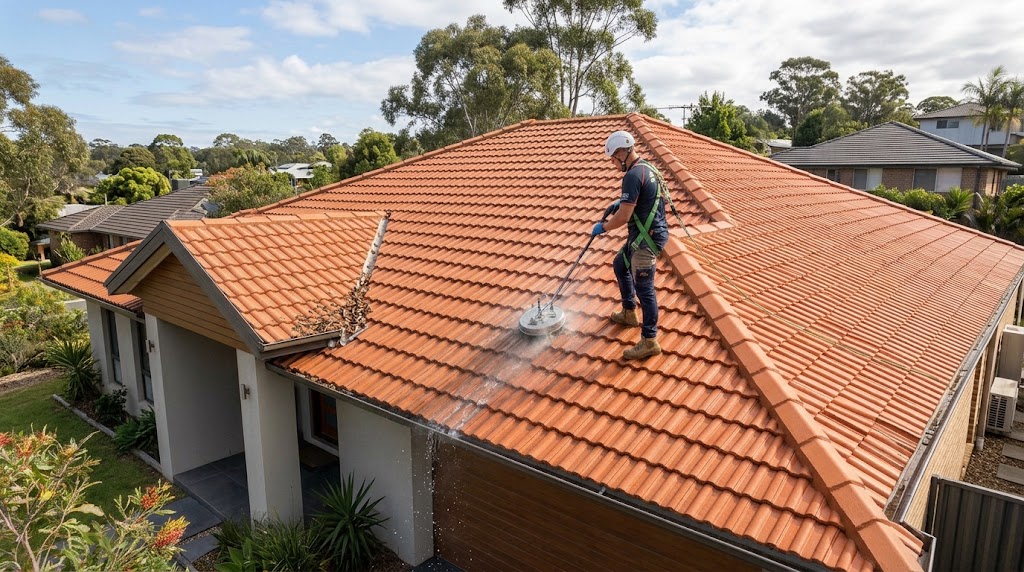
Cleaning may improve the appearance of the roof and make it easier to assess its condition. However, cleaning alone will not repair cracked tiles, leaking joints or damaged ridge caps.
The cleaning method should also suit the roofing material and its condition. Aggressive cleaning can damage fragile or deteriorated surfaces.
If your roof needs attention beyond basic maintenance, read this guide to roof cleaning and when it is needed.
8. Check the Condition of the Roof Coating
A protective roof coating can help improve the appearance of a suitable roof and protect its surface. However, coatings can wear down over time due to sunlight, rain and normal weather exposure.
Look for areas where the coating appears faded, peeling, patchy or uneven. You may also notice exposed areas where the original roof material is becoming more visible.
A worn coating does not automatically mean that the roof needs to be repainted. The surface should first be checked for underlying damage.
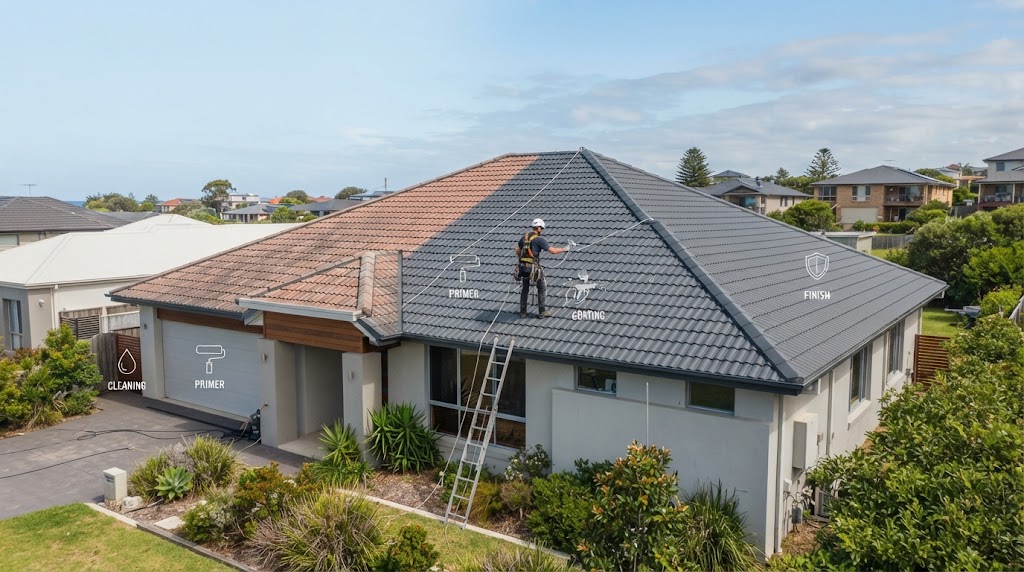
If the roof is structurally sound, professional roof coating services may be an option to improve surface protection.
Where the roof needs a new finish, professional roof painting may also be suitable after the necessary cleaning, preparation and repairs have been completed.
The correct solution depends on the material, existing coating and overall condition of the roof.
9. Check for Water Damage in the Roof Space
If your home has a safely accessible roof space, you may be able to identify warning signs from inside. However, do not enter a confined, poorly lit or unsafe area, and never step on ceiling plasterboard.
Use a safe access point and look from a stable position where possible.
Check for visible signs such as damp insulation, water marks on timber, mould growth or daylight entering through an unexpected gap.
Be careful around electrical wiring, ceiling joists and insulation. If access is difficult or you are unsure what you are looking at, leave the inspection to a professional.
Water damage inside the roof space may have several causes, including broken tiles, damaged flashing, leaking roof penetrations or condensation.
Identifying the cause is important because the right repair depends on what is allowing the moisture to enter or build up.
10. Inspect the Roof After Severe Weather
Strong winds, heavy rainfall and storms can cause sudden roof damage. Even if your home appears fine from the street, it is worth carrying out a visual check after severe weather has passed.
Look for missing tiles, fallen branches, debris, damaged gutters and new water stains inside the home.
Do not approach a roof if there are fallen power lines, unstable trees or other hazards nearby.
If a tree or large branch has struck the roof, there may be hidden structural damage. Do not assume the roof is safe simply because the ceiling looks normal.
Photograph visible damage from a safe location if you need records for your insurer. Contact a qualified professional to assess the situation and advise on repairs.
If the roof has an active leak or significant storm damage, emergency roof repair services may help secure the affected area and reduce further water entry.
Your Seasonal Roof Maintenance Checklist
You do not need to wait until a leak appears before checking your roof. A regular maintenance routine can help you identify problems earlier.
Spring Checklist
Spring is a useful time to check your roof before hotter weather and seasonal storms arrive.
- Look for cracked or missing tiles.
- Check for visible damage to gutters and downpipes.
- Look for moss and algae growth.
- Check the ceilings for water stains left by winter rain.
- Arrange repairs for any problems identified.
Summer Checklist
Hot weather and strong sunlight can affect roofing materials and protective coatings.
- Look for fading or peeling roof coatings.
- Check for signs of deterioration on metal roofing.
- Look for branches that may be close to the roof.
- Check the condition of gutters after windy weather.
- Arrange an assessment if you notice new damage.
Autumn Checklist
Falling leaves can cause drainage problems, particularly when trees overhang the house.
- Check for visible leaf build up in gutters.
- Look for branches that could fall onto the roof.
- Check for loose or damaged roof components.
- Look for damp areas around ceilings and walls.
- Arrange safe gutter cleaning where necessary.
Winter Checklist
Winter often brings more rain and damp conditions in many parts of Australia.
- Check for new ceiling stains after rainfall.
- Look for damp smells or visible mould indoors.
- Pay attention to recurring leaks.
- Check for overflowing gutters during rain from a safe location.
- Arrange repairs before small problems become more serious.
The exact maintenance needs of your roof will depend on its age, material, surrounding trees and local weather conditions.
When Should You Call a Professional Roofer?
Some problems can be identified from the ground, but diagnosing and repairing roof damage often requires specialist knowledge and equipment.
You should arrange a professional inspection if you notice any of the following.
- Water entering your home
- Broken or missing roof tiles
- Loose ridge caps
- Rust or holes in metal roofing
- Repeated leaks after rainfall
- Sagging roof sections
- Damaged flashing around roof openings
- Extensive moss or algae growth
- Peeling or failing roof coatings
- Visible damage following a storm
Do not delay repairs simply because the damage looks minor. A small leak can affect insulation, ceilings, timber and internal finishes if moisture continues to enter.
A professional can assess the roof and explain which repairs are necessary. This may involve replacing damaged tiles, repairing flashing, addressing ridge caps or recommending a more comprehensive restoration.
Roof Repair or Roof Restoration Which Do You Need?
Roof repairs and roof restoration serve different purposes.
A roof repair focuses on a specific problem. This might involve replacing broken tiles, fixing a leak or repairing a damaged section of roofing.
Roof restoration is a broader process designed to improve the condition of an existing roof. Depending on the roof, it may include cleaning, repairs, re bedding and re pointing ridge caps, sealing and applying protective coatings.
The right option depends on the age of the roof, the extent of the damage and the condition of the existing materials.
When Roof Repair May Be Enough
A targeted repair may be suitable when the roof is generally in good condition but has one or two damaged areas.
For example, replacing a broken tile or repairing a specific leak may solve the immediate problem without requiring work across the entire roof.
A professional inspection can help confirm whether the damage is isolated or part of a wider issue.
When Roof Restoration May Be Better
Restoration may be worth considering when several parts of the roof need attention.
You might notice widespread fading, recurring minor problems, damaged ridge pointing or significant surface build up. If the main roofing materials remain suitable for continued use, restoration may help improve the roof’s condition without replacing everything.
For homeowners with tiled roofs, terracotta tile restoration and cement tile restoration offer options suited to different roofing materials.
The best choice should be based on the actual condition of the roof rather than appearance alone.
How to Prepare Before Booking Roof Repairs
Once you have identified a possible problem, a little preparation can make the repair process easier.
Record the Warning Signs
Take photos of visible damage from the ground. Photograph ceiling stains, damaged gutters or fallen roof materials where it is safe to do so.
Make a note of when the problem first appeared and whether it becomes worse during rainfall.
Explain the Problem Clearly
When contacting a roofing contractor, explain what you have noticed.
For example, mention whether the leak appears after heavy rain, whether a ceiling stain is growing or whether you have found broken tiles around the property.
These details can help the contractor understand the issue before the inspection.
Ask What the Quote Includes
Before approving the work, ask for a clear explanation of the proposed repairs.
Find out which areas will be repaired, what materials will be used, whether additional problems may affect the cost and what warranty applies to the work.
If you are considering a broader restoration, this guide on choosing a roof restoration company in Australia explains what homeowners should consider when comparing roofing contractors.
Keep Records of the Work
Keep copies of quotes, invoices, inspection reports and relevant photographs.
These records can help you track the condition of your roof over time and provide useful information if you need further repairs in the future.
Common Roof Repair Mistakes Homeowners Should Avoid
Regular roof maintenance is helpful, but some approaches can create additional problems.
Ignoring Small Leaks
A small leak can allow moisture to spread into ceilings, insulation and timber. Arrange an assessment rather than waiting for the damage to become obvious.
Painting Over Existing Damage
Roof paint is not a substitute for repairing broken tiles, damaged flashing or faulty ridge caps. Underlying problems should be addressed before the surface is coated.
Using the Wrong Cleaning Method
Some roofs are older or more fragile than they appear. Incorrect pressure cleaning, unsuitable chemicals or rough tools can damage roofing materials.
Choose a cleaning method that suits the roof and its condition.
Climbing Onto the Roof Without Proper Safety Equipment
Roof surfaces can be steep, slippery and unstable. Wet tiles and metal sheets can be particularly dangerous.
Avoid walking on the roof or using ladders without appropriate training and safety equipment. A professional inspection is the safer option.
Choosing the Cheapest Quote Without Checking the Details
A low price does not always mean good value. Make sure the quote explains the work, materials and any exclusions.
A clear and detailed quote makes it easier to compare services and understand what you are paying for.
How Aussie Roof Revival Can Help
Finding roof damage early is only the first step. The next step is choosing a suitable repair or maintenance solution.
Aussie Roof Revival provides roofing services for homeowners who need help with damaged tiles, leaks, roof restoration, painting and protective coatings.
The appropriate service will depend on the type of roof and the problems identified during an inspection.
If the issue is limited to a particular section, targeted repairs may be sufficient. If the roof has widespread wear and several areas need attention, a broader restoration may be more suitable.
Homeowners can visit the Aussie Roof Revival website to learn more about available services and request an assessment.
The aim should always be to identify the cause of the problem and choose a practical solution that protects the home.
Frequently Asked Questions
How often should homeowners inspect their roof?
A visual inspection twice a year is a useful starting point. It is also worth checking for visible damage after major storms. Older roofs or homes surrounded by trees may need more frequent attention.
What are the most common signs that a roof needs repair?
Common warning signs include broken tiles, missing roofing materials, water stains on ceilings, damaged gutters, rust on metal roofing and loose ridge caps. Recurring leaks should always be investigated.
Can I inspect my roof myself?
You can check visible areas from the ground and look for water damage inside your home. However, you should not walk on the roof or climb into unsafe areas. A professional roofer can inspect difficult to access sections.
Should I repair a roof leak immediately?
Yes. You should arrange an assessment as soon as possible because continued water entry can damage ceilings, insulation, timber and internal finishes. If the leak is severe, seek urgent roofing assistance.
Is roof restoration better than roof repair?
Neither option is automatically better. Roof repair is suitable for specific problems, while restoration addresses the broader condition of the roof. The right choice depends on the extent of the damage and the condition of the roofing materials.
Can roof painting fix a leaking roof?
Roof painting alone should not be used to fix a leak. The cause of the leak must be identified and repaired first. Painting may be suitable afterwards if the roof is in an appropriate condition for coating.
What should I check after a storm?
Look for visible damage such as missing tiles, fallen branches, damaged gutters and new ceiling stains. Stay away from unstable structures and electrical hazards. Arrange a professional inspection if you suspect damage.
How can I prevent expensive roof repairs?
Regular visual checks, timely repairs, suitable gutter maintenance and professional inspections can help identify problems early. No maintenance routine can prevent every issue, but dealing with warning signs promptly may reduce the risk of further damage.
Final Thoughts
Your roof plays an important role in protecting your home, so regular maintenance should not be overlooked. A simple roof repair checklist can help you spot warning signs, monitor changes and decide when professional advice is needed.
Check for damaged tiles, loose ridge caps, leaks, blocked gutters, rust and worn coatings. Pay particular attention after severe weather and do not ignore recurring water stains or damp patches inside your home.
Most importantly, never put yourself at risk by climbing onto the roof to investigate a problem.
If you notice signs of damage, arrange a professional assessment before the issue becomes more serious. With the right repairs and ongoing maintenance, you can help keep your roof in good condition and protect your home for years to come.