Understanding Roof Restoration Basics
What Is Roof Restoration?
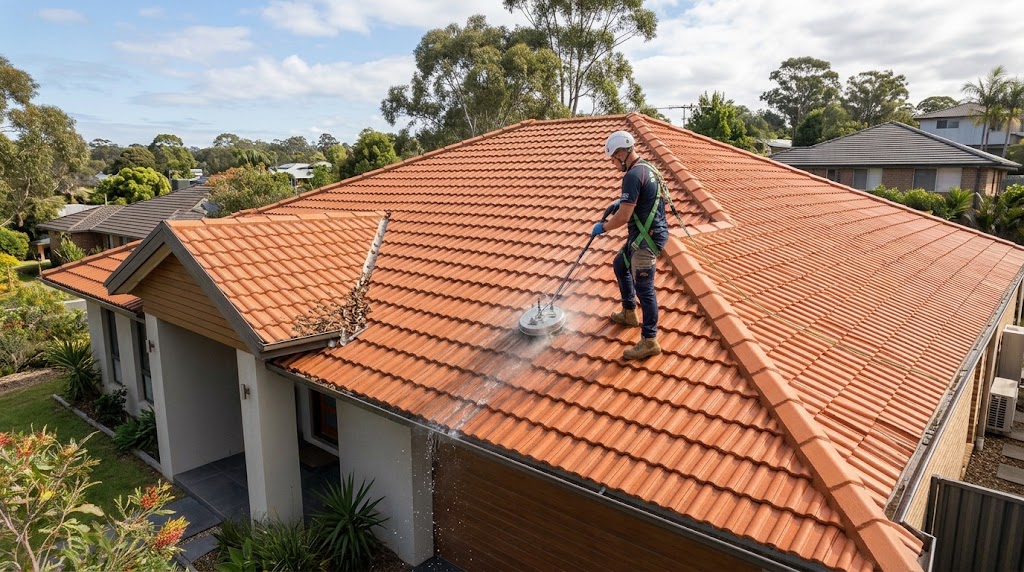
Roof restoration is often misunderstood as a simple repair job, but in reality, it’s a comprehensive process that breathes new life into your roof. Instead of replacing the entire structure, restoration focuses on cleaning, repairing, sealing, and recoating the roof to extend its lifespan and improve its performance. Think of it like giving your roof a full-body treatment rather than just patching up a scratch.
In New South Wales (NSW), where weather conditions can be unpredictable and sometimes harsh, roof restoration becomes even more crucial. Over time, roofs accumulate dirt, moss, lichen, and debris, which slowly degrade the materials. Add exposure to UV radiation, heavy rain, and occasional storms, and the wear and tear accelerates significantly. A proper restoration not only enhances the roof’s appearance but also reinforces its durability against future damage.
A professional restoration typically includes high-pressure cleaning, replacing broken tiles or rusted sections, repointing, resealing, and applying protective coatings. These coatings are particularly important because they act as a barrier against moisture and UV rays. Companies like Aussie Roof Revival specialize in tailored restoration services designed specifically for Australian conditions, ensuring your roof gets the treatment it actually needs.
What makes restoration so appealing is its cost-effectiveness. Compared to a full roof replacement, restoration is significantly cheaper while delivering impressive results. It’s like upgrading your roof without the hefty price tag. But here’s the catch—timing matters. Restore too late, and you might end up needing a full replacement anyway.
Difference Between Roof Repair and Restoration
Many homeowners in NSW confuse roof repairs with restoration, and that confusion can lead to costly decisions. While both services aim to improve your roof’s condition, they serve very different purposes. Understanding the difference is key to knowing how often your roof should be restored.
Roof repairs are targeted fixes. They address specific issues like a cracked tile, a minor leak, or a small patch of rust. It’s a quick solution for isolated problems, much like putting a band-aid on a cut. Repairs are essential, but they don’t improve the overall condition of your roof. If your roof is aging or has widespread wear, repairs alone won’t cut it.
Roof restoration, on the other hand, is a complete overhaul of your roof’s surface and functionality. It tackles multiple issues at once and improves the structural integrity of the entire system. Restoration doesn’t just fix problems—it prevents new ones from forming. It’s more like a full health check-up combined with a fitness program for your roof.
Here’s a simple comparison:
| Feature | Roof Repair | Roof Restoration |
| Scope | Small, specific fixes | Entire roof treatment |
| Cost | Lower upfront | Higher but long-term savings |
| Lifespan Impact | Minimal | Extends roof life by 10–15 years |
| Appearance | No major change | Significant improvement |
If you find yourself calling for repairs repeatedly, it’s a clear sign that restoration might be the smarter investment. Experts at Aussie Roof Revival often recommend restoration when repairs become frequent, as it addresses the root cause rather than just the symptoms.
Why Roof Restoration Matters in the NSW Climate
Impact of Harsh Weather Conditions
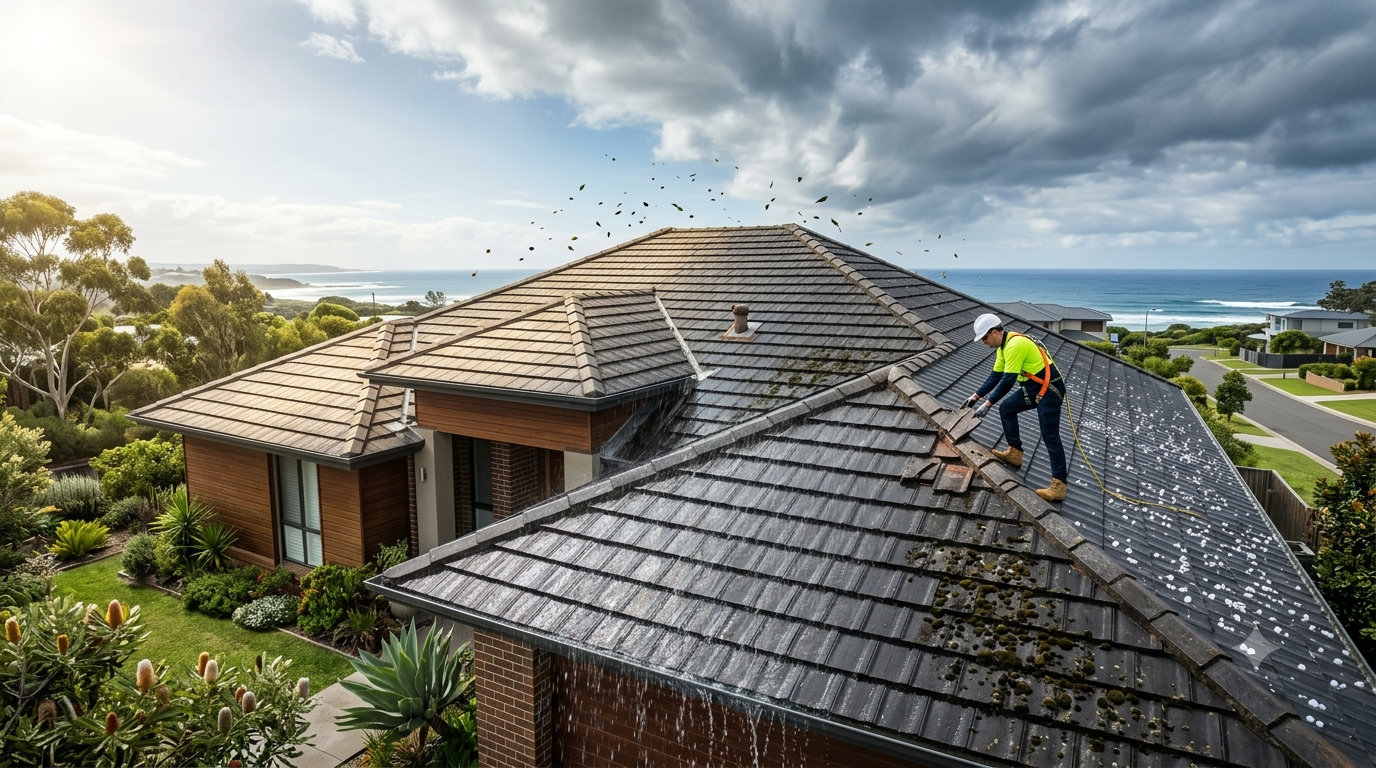
NSW weather can be surprisingly tough on roofs. One day you’ve got blazing sun, and the next, heavy rainfall or even hailstorms. This constant fluctuation creates a cycle of expansion and contraction in roofing materials, which gradually weakens them over time. It’s not something you notice overnight, but give it a few years, and the damage becomes evident.
UV radiation is one of the biggest culprits. Prolonged exposure to sunlight breaks down roofing materials, causing fading, cracking, and brittleness. This is especially common in older tile roofs, where the protective coating has worn off. Once that layer is gone, the tiles become more vulnerable to water absorption and structural damage.
Then there’s the rain. NSW experiences significant rainfall in many regions, and without proper sealing, water can seep into tiny cracks and gaps. Over time, this leads to leaks, mold growth, and even internal ceiling damage. Add in strong winds, and you’ve got debris hitting your roof, further accelerating wear and tear.
Regular restoration acts as a shield against these elements. By resealing and recoating your roof, you’re essentially resetting its ability to withstand harsh conditions. That’s why professionals, including those at Aussie Roof Revival, emphasize scheduled maintenance rather than reactive fixes.
Coastal vs Inland Roofing Challenges
Not all roofs in NSW face the same challenges. If you live near the coast, your roof is constantly exposed to salt-laden air, which can be incredibly corrosive—especially for metal roofs. Salt accelerates rusting and weakens structural integrity, making more frequent restoration necessary.
Inland areas, on the other hand, deal with extreme temperature variations. Hot summers can cause materials to expand, while cooler nights lead to contraction. This repeated cycle creates stress fractures and loosens components over time. Dust and debris are also more common inland, which can clog drainage systems and trap moisture.
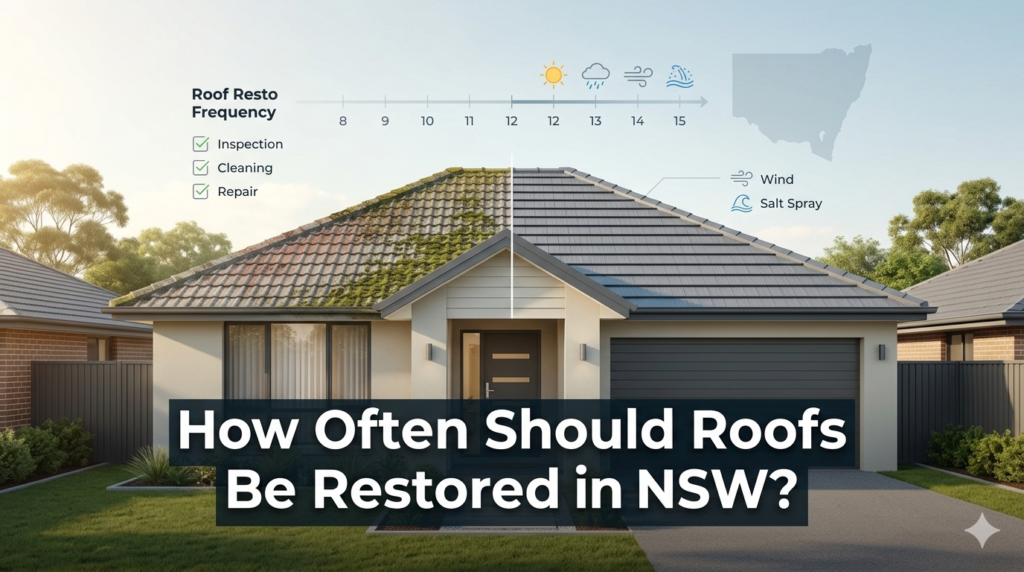
Because of these differences, there’s no one-size-fits-all answer to how often roofs should be restored in NSW. Coastal homes might require restoration every 8–10 years, while inland properties might stretch to 12–15 years, depending on maintenance.
Understanding your specific environment is crucial. A tailored approach, like the one offered by Aussie Roof Revival, ensures your roof gets the right care at the right time. After all, a roof near Bondi Beach faces very different challenges compared to one in Western Sydney.
How Often Should Roofs Be Restored?
General Timeline for Roof Restoration
If you’re looking for a straightforward answer, most roofs in NSW should be restored every 10 to 15 years. But here’s the truth—this isn’t a rigid rule. Think of it more like a guideline rather than a deadline. The actual timing depends heavily on the condition of your roof, the materials used, and how well it has been maintained over time.
For example, a well-maintained tiled roof in a mild suburban area might comfortably last 15 years before needing restoration. On the flip side, a roof exposed to coastal salt, heavy storms, or neglect could require attention as early as 8–10 years. The difference often comes down to how proactive you are. Waiting until visible damage appears is like waiting for your car to break down before servicing it—it usually costs more in the long run.
Professional roofers often recommend scheduling inspections every couple of years and planning restoration before major issues arise. According to industry insights, timely restoration can extend your roof’s lifespan by up to 15 years, which is a significant return on investment. This is why companies like Aussie Roof Revival focus on preventative care rather than reactive repairs.
Another important factor is the age of your roof. If your roof is already 15–20 years old and hasn’t been restored before, it’s likely overdue. Even if it looks “fine” from the ground, underlying issues such as weakened pointing or hidden leaks may already be developing. Restoration at this stage can prevent the need for a full replacement, which is far more expensive.
So, while the 10–15 year rule is a solid benchmark, the smarter approach is to treat restoration as part of a long-term maintenance strategy. It’s not just about fixing problems—it’s about staying ahead of them.
Factors That Affect Restoration Frequency
Not all roofs age at the same pace, and several factors can speed up or slow down the need for restoration. Understanding these variables helps you make better decisions and avoid unnecessary expenses.
One of the biggest influences is roof material. Tile roofs and metal roofs behave very differently over time. Tiles are more resistant to corrosion but can crack or shift, while metal roofs are durable but prone to rust, especially in coastal areas. Each material comes with its own maintenance timeline, which directly impacts how often restoration is needed.
Another key factor is environmental exposure. Homes near the ocean deal with salt corrosion, while those in leafy suburbs may struggle with moss and debris buildup. Areas prone to storms or hail will naturally see faster wear and tear. Even something as simple as the direction your roof faces can affect how much sunlight and weather it absorbs.
Maintenance habits also play a huge role. Regular cleaning, gutter maintenance, and minor repairs can significantly delay the need for full restoration. Neglect, on the other hand, accelerates deterioration. A roof that’s ignored for years will almost always require more frequent and costly restoration.
Lastly, the quality of previous work matters. If your last restoration was done poorly or with low-quality materials, you’ll likely need another one sooner than expected. This is why choosing experienced professionals like Aussie Roof Revival makes a noticeable difference—they use high-grade coatings and proven techniques that stand the test of time.
When you combine all these factors, it becomes clear that roof restoration isn’t a one-size-fits-all schedule. It’s a dynamic process that depends on your unique situation.
Key Signs Your Roof Needs Restoration
Visible Exterior Damage
Sometimes your roof practically tells you it needs attention—you just have to know what to look for. Visible damage is often the first and most obvious sign that restoration is overdue. The tricky part? Many homeowners either overlook these signs or underestimate their severity.
Cracked or broken tiles are a major red flag. Even a few damaged tiles can allow water to seep in, leading to bigger structural issues over time. Similarly, faded or peeling paint isn’t just an aesthetic problem—it indicates that the protective coating has worn off, leaving the roof exposed to the elements.
Moss, lichen, and algae growth are also common in NSW, especially in shaded or damp areas. While they might look harmless, they actually trap moisture against the roof surface, accelerating deterioration. If your roof is starting to look more green than its original color, it’s definitely time to consider restoration.
For metal roofs, rust is the biggest concern. Small rust spots can quickly spread if left untreated, eventually compromising the entire structure. You might also notice loose screws, warped panels, or areas where the metal appears thinner.
Here’s a quick snapshot of common exterior warning signs:
| Warning Sign | What It Means |
| Cracked tiles | Water penetration risk |
| Faded coating | Loss of UV protection |
| Moss growth | Moisture retention |
| Rust spots | Structural weakening |
Ignoring these signs is like ignoring a leaking pipe—it only gets worse. A professional assessment from Aussie Roof Revival can help determine whether restoration is enough or if more extensive work is needed.
Internal Warning Signs
While exterior damage is easier to spot, internal signs can be even more alarming. By the time issues show up inside your home, the problem has usually progressed further than you’d like.
Water stains on ceilings or walls are one of the most common indicators. These stains often appear as yellow or brown patches and may grow over time. They’re a clear sign that water is finding its way through your roof and into your home. Left untreated, this can lead to mold growth and structural damage.
Another warning sign is peeling paint or bubbling plaster inside your home. This happens when moisture gets trapped beneath the surface, weakening the material. You might also notice a musty smell, especially in the attic or upper rooms, which often points to hidden leaks or poor ventilation.
Temperature fluctuations can also hint at roofing issues. If your home becomes unusually hot in summer or cold in winter, your roof’s insulation or sealing may be compromised. Restoration can help improve energy efficiency by sealing gaps and applying reflective coatings.
It’s easy to dismiss these signs as minor issues, but they rarely stay that way. Addressing them early with a professional restoration service—like those offered by Aussie Roof Revival—can save you from much bigger headaches down the line.
Types of Roofs and Their Restoration Cycles
Tile Roof Restoration Frequency
Tile roofs are incredibly popular across NSW, and for good reason—they’re durable, visually appealing, and well-suited to Australian conditions. But like anything exposed to the elements, they’re not immune to wear and tear. Understanding how often tile roofs need restoration can help you keep them in top shape for decades.
On average, tile roofs should be restored every 10 to 15 years, depending on their condition and environment. Concrete tiles tend to lose their protective coating over time, making them more porous and prone to water absorption. Terracotta tiles, while more durable, can still develop cracks or become displaced.
One of the biggest issues with tile roofs is deteriorating mortar and pointing. This is what holds the ridge caps in place, and over time, it can crack and weaken. When this happens, tiles can shift, creating gaps that allow water to enter. Restoration involves repointing and resealing these areas to restore structural integrity.
Another factor is dirt and organic growth. Tile roofs are particularly susceptible to moss and lichen, especially in shaded areas. Regular cleaning is essential, but eventually, a full restoration is needed to remove buildup and apply a fresh protective coating.
Working with experts like Aussie Roof Revival ensures your tile roof gets the right treatment, from high-pressure cleaning to advanced sealing techniques. The result? A roof that not only looks brand new but also performs like it.
Metal Roof Restoration Frequency
Metal roofs are known for their strength and longevity, but they come with their own set of challenges—especially in NSW’s diverse climate. While they can last longer than tile roofs, they still require periodic restoration to maintain their performance.
Typically, metal roofs should be restored every 10 to 20 years, depending on exposure and maintenance. Coastal areas may require more frequent restoration due to salt corrosion, which can accelerate rust formation. Inland roofs, while less exposed to salt, still face issues like thermal expansion and UV damage.
Rust is the number one enemy of metal roofs. It often starts small but can spread بسرعة if not treated promptly. Restoration involves removing rust, applying anti-corrosion primers, and sealing the surface with protective coatings. This process not only stops existing damage but also prevents future issues.
Another common problem is loose fasteners and degraded seals. Over time, screws can loosen, and sealants can break down, allowing water to seep in. Restoration addresses these issues by tightening, replacing, and resealing components.
Choosing a professional service like Aussie Roof Revival ensures that every detail is handled properly, from rust treatment to high-quality coatings designed for Australian conditions. It’s not just about fixing the roof—it’s about future-proofing it.
Cost vs Value of Regular Roof Restoration
Average Costs in NSW
When homeowners think about roof restoration, the first question that usually comes to mind is: How much is this going to cost me? It’s a fair concern, especially with rising living expenses across NSW. But the answer isn’t one-size-fits-all. Roof restoration costs vary depending on several factors, including roof size, material, condition, and accessibility.
On average, roof restoration in NSW typically ranges between $2,500 and $10,000. Smaller homes with minimal damage may fall on the lower end, while larger or heavily worn roofs can push toward the higher range. Tile roofs often require more labor due to cleaning, repointing, and individual tile replacement, while metal roofs may need extensive rust treatment and recoating.
Here’s a quick cost comparison to give you a clearer picture:
| Roof Type | Average Restoration Cost (NSW) |
| Tile Roof | $3,000 – $8,000 |
| Metal Roof | $2,500 – $7,000 |
| Terracotta Roof | $4,000 – $10,000 |
While these numbers might seem significant upfront, they’re still far more affordable than a full roof replacement, which can easily exceed $20,000 to $40,000 depending on the property. That’s where restoration becomes a smart financial decision rather than just a maintenance task.
It’s also worth noting that working with trusted professionals like Aussie Roof Revival ensures transparency in pricing and quality workmanship. Cheap services might cut corners, leading to recurring problems and higher costs in the long run. Investing in a proper restoration today can save you from major expenses tomorrow.
Long-Term Savings and ROI
Roof restoration isn’t just an expense—it’s an investment with measurable returns. Think of it as putting money into protecting one of your home’s most valuable assets. When done at the right time, restoration can significantly extend your roof’s lifespan, often by 10 to 15 years or more.
One of the biggest financial benefits comes from avoiding premature roof replacement. Instead of spending tens of thousands on a new roof, a well-timed restoration keeps your existing structure in excellent condition. Over time, this translates into substantial savings.
Energy efficiency is another often-overlooked advantage. Modern roof coatings are designed to reflect heat, reducing indoor temperatures during NSW’s hot summers. This means less reliance on air conditioning and lower energy bills. According to industry estimates, reflective coatings can reduce cooling costs by up to 20%, depending on your home’s design.
There’s also the impact on property value. A clean, well-maintained roof instantly boosts curb appeal, which can make a big difference if you’re planning to sell. Buyers are far more likely to pay a premium for a home that doesn’t come with looming maintenance issues.
Working with experienced providers like Aussie Roof Revival ensures you get maximum value from your restoration. Their tailored solutions are designed to deliver long-term performance, not just a quick visual upgrade. When you look at the bigger picture, restoration isn’t just about fixing a roof—it’s about protecting your investment and improving your home’s overall efficiency.
Professional Roof Inspection Importance
How Often Should You Inspect Your Roof?
If roof restoration is the big milestone, then inspections are the regular check-ups that keep everything on track. Many homeowners in NSW overlook this step, assuming that if there’s no visible problem, everything must be fine. Unfortunately, roofs don’t always work that way.
Experts recommend inspecting your roof at least once every 1 to 2 years, along with additional checks after major weather events like storms or hail. These inspections help identify minor issues before they escalate into costly repairs or full restorations. It’s a proactive approach that saves both time and money.
During an inspection, professionals look for early signs of wear such as cracked tiles, loose fittings, rust spots, and deteriorating sealants. They also assess drainage systems, ensuring gutters and downpipes are functioning properly. Even small blockages can lead to water pooling and long-term damage.
Regular inspections also help you plan ahead. Instead of being caught off guard by sudden issues, you’ll have a clear understanding of your roof’s condition and when restoration might be needed. This allows for better budgeting and avoids emergency expenses.
Companies like Aussie Roof Revival offer detailed inspection services that provide homeowners with actionable insights. Rather than guessing, you get a clear roadmap for maintaining your roof’s health over time.
Why Hire Experts Like Aussie Roof Revival
You might be tempted to climb up and inspect your roof yourself, but that approach comes with risks—both in terms of safety and accuracy. Professional roofers bring experience, tools, and trained eyes that can spot issues most homeowners would miss.
Hiring experts like Aussie Roof Revival means you’re getting a thorough assessment backed by industry knowledge. They understand the unique challenges of NSW roofs, from coastal corrosion to inland temperature extremes. This local expertise makes a significant difference in both diagnosis and treatment.
Another advantage is access to high-quality materials and techniques. Professional restorations use advanced coatings, sealants, and equipment that aren’t typically available to the average homeowner. These materials are designed to withstand Australian conditions, ensuring longer-lasting results.
There’s also peace of mind. Knowing that your roof has been inspected and restored by professionals reduces stress and eliminates guesswork. Many services also come with warranties, adding an extra layer of protection for your investment.
In short, hiring professionals isn’t just about convenience—it’s about getting the job done right the first time. And when it comes to something as critical as your roof, that’s a decision that pays off in the long run.
DIY vs Professional Roof Restoration
Risks of DIY Restoration
The idea of saving money by tackling roof restoration yourself can be tempting. After all, how hard can it be to clean and repaint a roof? The reality, however, is far more complex—and often more dangerous.
Roof work involves significant safety risks. Slippery surfaces, steep angles, and unpredictable weather conditions make it easy to lose footing. Without proper safety equipment and training, DIY restoration can quickly turn into a serious hazard.
Beyond safety, there’s the issue of quality. Roof restoration isn’t just about appearance—it’s about ensuring structural integrity and long-term performance. Incorrect cleaning techniques, poor sealing, or low-quality coatings can actually do more harm than good. For example, using excessive pressure during cleaning can damage tiles or force water into hidden gaps.
There’s also the risk of incomplete work. Missing small cracks or failing to address underlying issues can lead to recurring problems. What seems like a cost-saving measure can end up costing more in repairs down the line.
Benefits of Hiring Professionals
Choosing professional restoration over DIY is like choosing a skilled mechanic over a quick YouTube fix—it simply delivers better results. Professionals bring expertise, efficiency, and reliability to the table.
With companies like Aussie Roof Revival, you’re getting a comprehensive service that covers every aspect of restoration. From initial inspection to final coating, each step is handled with precision. This ensures not only a visually appealing finish but also long-lasting protection.
Professionals also use specialized equipment and premium materials designed for durability. These aren’t the kind of products you’ll find at your local hardware store. They’re engineered to withstand NSW’s climate, providing superior resistance to UV rays, moisture, and corrosion.
Another key benefit is time savings. What might take a homeowner several weekends to attempt can be completed efficiently by a professional team. More importantly, it’s done correctly the first time, eliminating the need for rework.
When you weigh the risks and benefits, professional restoration clearly stands out as the smarter choice—both financially and practically.
Preventative Maintenance Tips
Simple Maintenance Practices
Keeping your roof in good condition doesn’t always require major work. In fact, simple, consistent maintenance can significantly delay the need for restoration and extend your roof’s lifespan.
Start with regular cleaning. Removing leaves, dirt, and debris prevents moisture buildup and reduces the risk of mold or algae growth. Pay special attention to gutters and downpipes, as blockages can lead to water overflow and damage.
Trimming overhanging branches is another easy yet effective step. Not only does it reduce debris accumulation, but it also minimizes the risk of physical damage during storms.
It’s also important to address minor issues promptly. A small crack or loose tile might not seem urgent, but ignoring it can lead to bigger problems over time. Quick repairs keep your roof in optimal condition and prevent the need for more extensive work.
Seasonal Roof Care Checklist
Different seasons bring different challenges, and adjusting your maintenance routine accordingly can make a big difference. Here’s a simple seasonal approach:
- Summer: Check for heat damage and fading coatings
- Autumn: Clear fallen leaves and inspect gutters
- Winter: Look for leaks and water pooling
- Spring: Inspect for storm damage and clean surfaces
Following a seasonal checklist ensures that your roof remains in top condition year-round. It’s a small effort that delivers big results over time.
Conclusion
Roof restoration in NSW isn’t something you can afford to ignore or delay indefinitely. While the general guideline suggests restoring your roof every 10 to 15 years, the real answer depends on your environment, roof type, and maintenance habits. Coastal homes may need more frequent attention, while well-maintained inland roofs can last longer between restorations.
The key takeaway is simple: don’t wait for obvious damage. Regular inspections, timely maintenance, and professional restoration can save you thousands of dollars and extend your roof’s life by over a decade. Whether it’s dealing with harsh sun, heavy rain, or salt-laden air, staying proactive is the smartest approach.
Working with trusted experts like Aussie Roof Revival ensures your roof gets the care it deserves. From inspections to full restorations, their tailored solutions are designed specifically for NSW conditions, giving you peace of mind and long-term value.
FAQs
1. How do I know if my roof needs restoration or replacement?
If your roof has minor to moderate damage, restoration is usually sufficient. However, severe structural issues or extensive deterioration may require a full replacement. A professional inspection can determine the best option.
2. Can roof restoration increase property value?
Yes, a restored roof improves curb appeal and reassures buyers that the property is well-maintained, often increasing its market value.
3. How long does a roof restoration take?
Most restorations are completed within 2 to 5 days, depending on the size and condition of the roof.
4. Is roof restoration worth it for older homes?
Absolutely. As long as the structure is sound, restoration can significantly extend the roof’s life and improve performance.
5. Does insurance cover roof restoration in NSW?
Insurance typically covers damage from unexpected events like storms but not general wear and tear. Restoration is usually considered a maintenance expense.